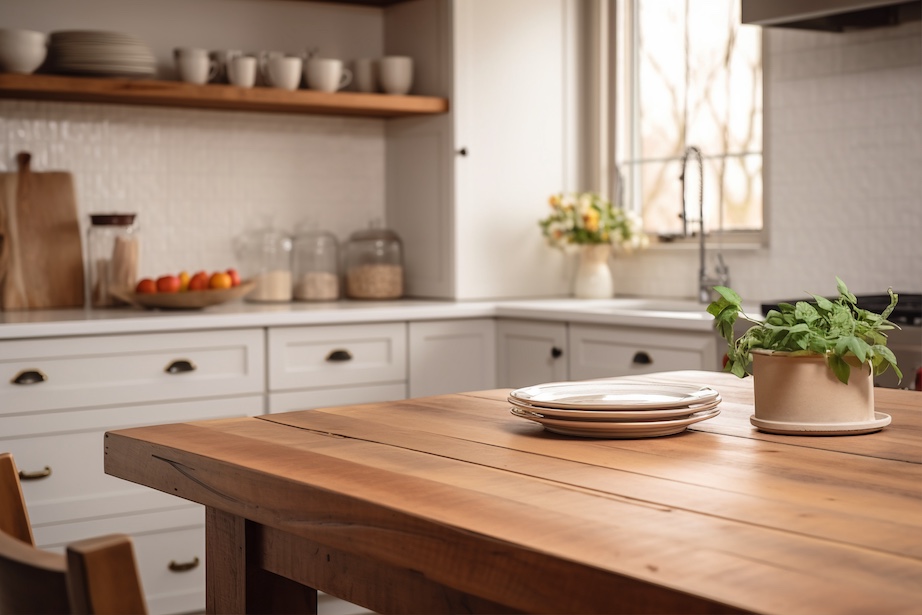
Some furniture looks good until real life happens around it. A kitchen table does not get that luxury. It deals with daily pressure from meals, work laptops, grocery bags, kid art projects, and anything that does not have a place yet. It has to stay solid, easy to clean, and visually calm, even when everything around it is busy.
Wood succeeds in these conditions. It does not rely on trend appeal or novelty shapes to stay relevant. It stays useful because the material can hold up to everyday use without demanding delicate treatment.
Built for Everyday Wear
Kitchen tables take hits that other furniture avoids. Scraping dishes. Hot plates. Constant wiping. Accidental dents. A well-constructed wood table can absorb that level of wear and still look like it belongs in a finished space.
The surface improves with time because patina forms rather than damage. Edges soften slightly instead of chipping. The structure remains steady rather than bowing or rattling. Durability turns a daily workhorse into a long-term fixture.
A table should earn its place rather than defend it.
Style That Keeps Up With Life
Homes do not stay frozen in one design moment. Paint changes. Chairs get swapped. A light fixture is replaced. The table needs to adapt as style shifts.
Wood supports that flexibility. It works with a quiet range of looks:
• Traditional spaces with warm tones
• Clean, modern layouts
• Scandinavian simplicity with soft neutrals
• Layered, eclectic mixes that evolve over time
There is no need to replace the table just to keep up with the room around it. It can anchor the space while everything else experiments.
Designed With Space and Movement in Mind
The shape and structure of the table influence how comfortable a kitchen feels. Wood can be built in formats that solve real layout constraints rather than squeeze into them.
Consider what creates ease:
• Round tables make tight rooms more comfortable to navigate
• Extension leaves support bigger gatherings without permanent bulk
• Slimmer legs or trestle bases open up more seating options
• Proper proportions keep the room from feeling crowded
The right table improves how people move through the space, not just how the space looks.
A Surface That Feels Right
Some surfaces look clean until fingerprints, scratches, and reflections take over. Wood has natural visual texture, which makes imperfections disappear into the grain. A matte or soft satin finish keeps the surface grounded and comfortable to touch.
This creates a table that feels familiar. Not precious. Not overly polished. Just usable without hesitation.
Comfort is a design decision too.
Construction You Can Trust
A table can look like wood without any structural benefits of wood. The internal build determines whether a piece will last through years of meals or start wobbling after a few moves.
Useful details to check:
• Solid wood or strong engineered wood that resists warping
• Joints that stay tight without constant tightening
• A protective finish that can handle heat and regular cleaning
• Slat and support systems built for weight and longevity
These elements are easier to evaluate through retailers who focus on quality. Browsing wooden kitchen tables where construction is shown clearly gives a better understanding of what you’re buying.
A table is only as trustworthy as the parts you do not see.
Care That Fits Into Real Routines
Maintenance should match real life, not ideal habits. Wood care is often simple: clean spills efficiently, protect the surface from prolonged moisture, and refresh the finish occasionally if the table sees heavy daily use.
Clear expectations keep the table looking and performing the way it should.
A high-maintenance surface turns a kitchen into a showroom. A low-maintenance one keeps the room honest.
A Table That Earns Attention by Supporting Life
People tend to gather at wood surfaces instinctively. It feels grounded and approachable. You can drop your keys, set down a grocery bag, take notes, and start chopping vegetables without worrying that the table will object.
Its presence is functional first, familiar second, and stylish without effort.
A good table does not need to be the focal point. It just needs to be there every time you reach for it.
A Long-Term Choice in a Temporary World
Fast furniture fills space. A wood kitchen table fills a role. It stays when trends shift and when rooms change purpose. It becomes one of the few pieces that moves with you rather than being replaced.
You buy it once. You use it every day. You keep it through the phases of life that come after the one you are living now.
The best table is the one you stop thinking about because it is always doing its job.
Contributed posts are advertisements written by third parties who have paid Woman Around Town for publication.