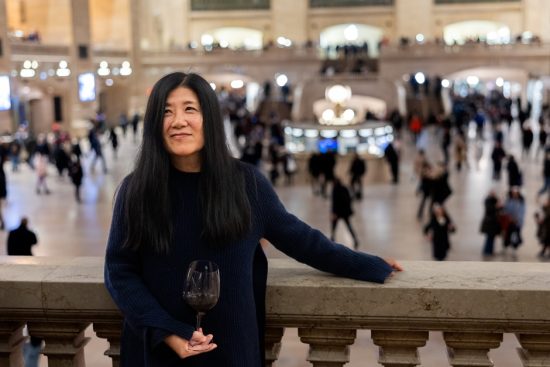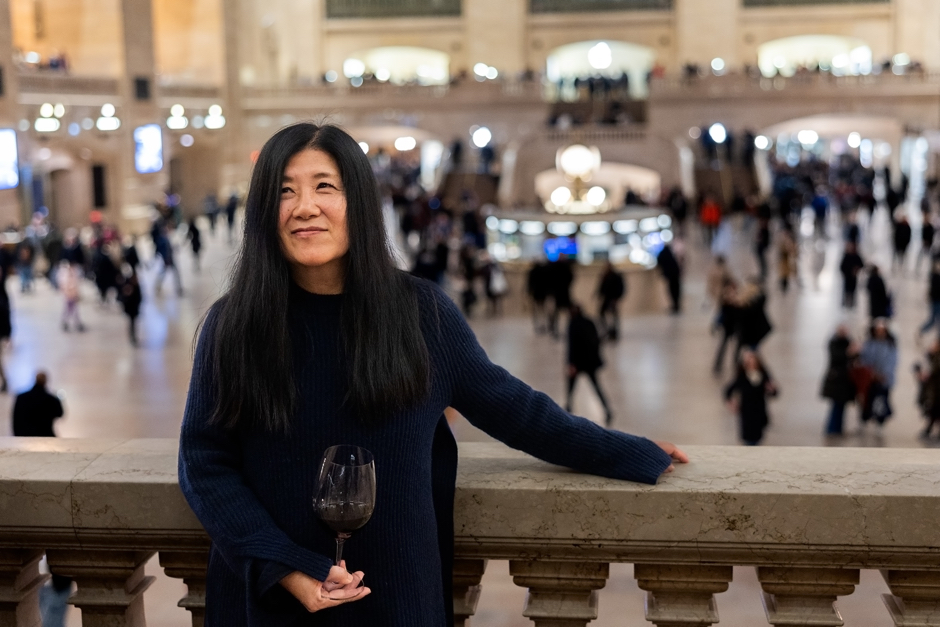
Stevie Kim leads initiatives including OperaWine, produced in partnership with Wine Spectator; wine2wine Vinitaly Business Forum; 5StarWines – the Book; and Vinitaly International Academy, which she founded to train a global network of Italian Wine Ambassadors and Experts. She is also the founder and host of the Italian Wine Podcast and the creator of Mamma Jumbo Shrimp, a multimedia platform dedicated to Italian wine, food, travel and culture. Frequently described as an “Italian Wine Evangelist,” Stevie approaches wine as an outsider who became an insider, without ever losing the outsider’s habit of asking difficult questions.
What first sparked your interest in the wine industry?
To be completely honest, I did not grow up dreaming of a career in wine. I grew up in New York, studied economics and arrived in Verona through a rather unconventional route. When I began working with Veronafiere more than 15 years ago, wine was not my specialist subject, and that may have been my greatest advantage. I was fascinated by the contradiction. Italy had thousands of native grape varieties, centuries of history and some of the world’s most beautiful wine regions, yet it did not always communicate that story clearly to international audiences. Italian wine also reminded me of Italian people: enormously creative, passionate and intensely individualistic, which can result in a rather fragmented way of presenting ourselves to the world.
I wanted to understand why Italian wine could be so emotionally compelling and yet so intimidating to explain. I began asking questions, probably far too many, and I have not stopped since.
How can the wine business remain relevant to modern consumers? What are the biggest challenges facing the wine industry today?
Wine must stop expecting consumers to do all the work. We cannot tell people that wine is complicated, surround it with rules and rituals, and then wonder why younger consumers choose something else. The industry needs to make wine more accessible without making it meaningless. That means using ordinary language and connecting wine with food, travel, friendship, culture and place. Education should invite people in, not remind them of everything they do not know. The challenges are significant: changing drinking habits, health concerns, economic uncertainty, climate change, fragmented distribution and competition from other beverages. Too much wine marketing also continues to speak to the industry rather than to the person who is simply curious about buying a bottle. At the same time, wine geeks really do want to know everything about the topography, geology, history and personality behind every grape. Different strokes for different folks. The challenge is knowing whom you are speaking to.
What are some of the biggest challenges you face as Managing Partner of Italy’s largest wine trade fair?
The greatest challenge is also Vinitaly’s greatest strength: diversity.
Italian wine is not one story. It represents hundreds of territories, thousands of producers, countless native grapes and very different commercial realities. Vinitaly must serve the iconic estates as well as the small family producer attempting to enter an export market for the first time.
A major trade fair can no longer simply provide a large room filled with stands and hope that business happens. We must create meaningful meetings, attract qualified international buyers, support education, identify new markets and help producers understand how demand is changing.
There is also the challenge of keeping an established institution agile. Vinitaly has a long history, but history alone does not guarantee relevance. My role is often to respect tradition while gently, or occasionally not so gently, pushing the organisation to experiment and allowing room for mistakes.
Vinitaly.USA is coming to New York City for the first time, bringing together more than 250 Italian wine producers and further strengthening the long-standing relationship between Italy, New York and the U.S. What makes Italian wine continue to resonate with and appeal to U.S. consumers?
Italian wine feels personal to many Americans. Even without Italian ancestry, people often have an emotional relationship with Italian food, travel and hospitality. A bottle can evoke a place, a family table or the fantasy of disappearing to Tuscany for several weeks and refusing to answer emails.
Its appeal, however, goes much deeper than lifestyle imagery. Italy offers extraordinary diversity. Consumers can move from the volcanic wines of Etna to the alpine varieties of Alto Adige, from Barolo and Brunello to Verdicchio, Aglianico, Timorasso or Pelaverga. There is always another region, grape or producer to discover.
Italian wine also belongs naturally at the table, making it particularly relevant in New York, where eating and drinking are ways of exploring the world.
Bringing Vinitaly.USA to New York on October 26 and 27, 2026, will connect more than 300 Italian producers directly with the American trade. New York is a major wine market, a centre of hospitality and communications and, for me personally, the city where my own story began.
One of Italian wine’s greatest strengths has been wine tourism. We are all aware of how The White Lotus helped put Sicily, and Sicilian wine, in the spotlight. What are some of the emerging wine regions and travel trends that U.S. consumers should explore?
The White Lotus had an incredible impact on Sicily and, indirectly, on Sicilian wine, particularly Etna. I remember calling Alessio Planeta after a Planeta Etna wine appeared on screen for barely minutes. The market responded almost immediately. Today, finding a room in Taormina, or even around Etna, can be a challenge.
Sicily deserves the attention, but travellers should look beyond the places they have seen on television. Etna is one of my personal favorites, but Vittoria, Marsala and the smaller islands offer completely different expressions of Sicilian culture.
I would also encourage Americans to explore Calabria, Basilicata, Abruzzo, Friuli-Venezia Giulia, the Marche and lesser-known areas of Piedmont. Calabria combines ancient grapes, dramatic landscapes, archaeological history and a powerful local identity that has not yet been packaged for mass tourism. Basilicata’s volcanic Aglianico del Vulture territory also deserves much greater attention.
In Piedmont, there is far more than Barolo and Barbaresco. Roero, Alto Piemonte, Tortona and Verduno offer intimate experiences and introduce travelers to varieties they may never have encountered.
The broader trend is away from checklist tourism. People want to meet producers, walk through vineyards, cook with local families and stay in villages. The future of wine tourism is slower, more personal and more connected to the culture of a place.
Looking back on your career, what accomplishments in the wine industry have given you the greatest sense of pride and helped shape your work promoting Italian wine?
I am proudest of the communities we have built.
Creating OperaWine with Wine Spectator established an international showcase for Italian wine. Building wine2wine gave the industry a place to discuss not only success stories, but also uncomfortable business issues that are often avoided.
Vinitaly International Academy is perhaps closest to my heart. Italian wine needed highly trained advocates who could explain its complexity accurately and enthusiastically. Watching our Ambassadors and Experts teach, write, import, sell and communicate Italian wine around the world has been incredibly rewarding.
I am also very proud of the Italian Wine Podcast. When we started, many people thought a daily podcast about Italian wine was slightly mad. They were probably right, but we did it anyway. Wine is already a niche, and podcasting about wine is an even smaller one, but we remain prolific in spreading the gospel of Italian wine and, more importantly, telling the stories of Italian wine people.
The thread connecting all these projects is education, not as a display of expertise, but as a form of influence and connection.
What advice would you give to someone considering a career in the wine industry today?
Do not begin by trying to appear knowledgeable. Begin by being curious.
The wine industry has enough people pretending to know everything. Ask questions, taste widely, visit producers and learn how the business actually works. Wine knowledge matters, but so do communication, finance, logistics, technology, hospitality and cultural awareness.
Look beyond the obvious professions. You do not have to become a sommelier or winemaker. The industry also needs researchers, event organisers, designers, data analysts, educators, sustainability specialists and people who understand international markets.
Be prepared to work hard. Wine may look glamorous on Instagram, but much of the job involves spreadsheets, delayed shipments, missing bottles, early mornings and trying to find someone who disappeared five minutes before a presentation.
Most importantly, find the part of the industry that suits your own skills and personality. Wine becomes stronger when it welcomes people with different backgrounds and ways of seeing the world.
Is there anything else you would like Woman Around Town readers to know?
You do not need anyone’s permission to enjoy wine.
You do not need the perfect vocabulary, the correct glass or an encyclopaedic knowledge of vintages. Start with what you like, remain curious and ask the person selling or serving the wine to tell you its story. A good wine professional should make you feel more confident, not less.
I would also invite readers to meet the people behind Italian wine at Vinitaly.USA in New York. Behind every bottle is an agricultural business, a family, a territory and, very often, several generations of stubborn people determined to keep doing things the difficult way.
Wine is never only what is inside the glass. It is a pretext for bringing people together, and right now, we need more opportunities to do exactly that.
Websites:
Vinitaly
Vinitaly International Academy
Italian Wine Podcast
Mamma Jumbo Shrimp
Instagram:
@steviekim222
@vinitalyinternational
@vinitalyusa.official
@italianwinepodcast
@mammajumboshrimp
LinkedIn:
Stevie Kim
Vinitaly
Vinitaly.USA Official
Italian Wine Podcast