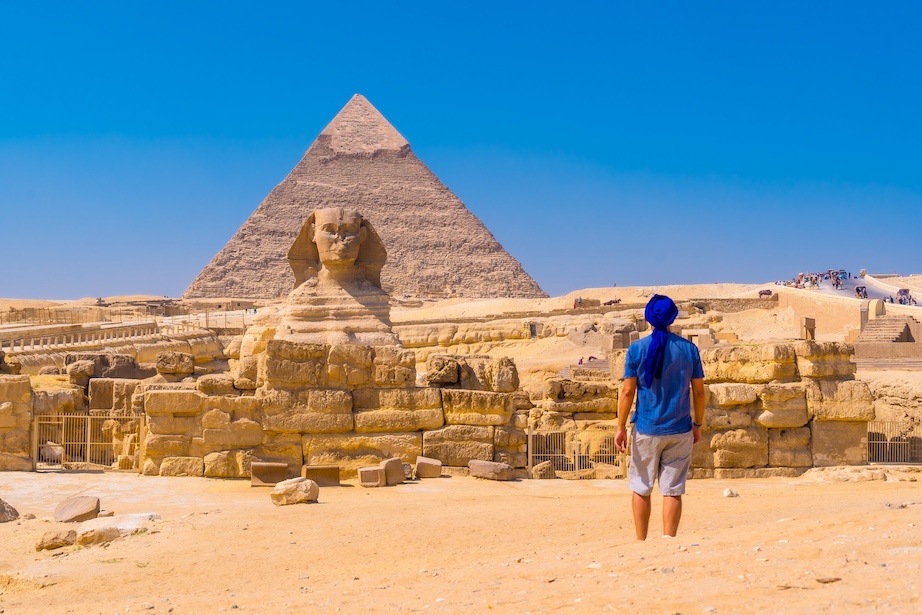
Few structures in human history evoke as much wonder and admiration as the Great Pyramid of Giza. Towering for over 4,500 years on the Giza Plateau, this ancient marvel continues to captivate historians, architects, and travelers alike. Its massive scale, precise construction, and mysterious origins have inspired countless theories and explorations. While many visitors are content to admire the pyramid from a distance or study its grand exterior, the true marvel lies deep within its internal chambers, spaces that reveal the brilliance and ingenuity of ancient Egyptian architecture.
The Great Pyramid, constructed as a tomb for Pharaoh Khufu, initially reached an astonishing height of approximately 481 feet (about 146 meters). It consists of an estimated 2.3 million limestone and granite blocks, some weighing up to 80 tons. Moving and assembling such massive stones with remarkable precision without the aid of modern technology remains one of the most outstanding engineering achievements of the ancient world. Experts still debate the exact methods employed, adding to the pyramid’s mystery.
Beyond its impressive exterior, the pyramid houses a complex internal layout designed for practical burial purposes and rich symbolic meaning. Visitors can explore several key chambers, including the King’s Chamber, the Queen’s Chamber, and the Grand Gallery, each showcasing extraordinary construction techniques. For example, the King’s Chamber is constructed entirely of massive granite blocks transported from quarries hundreds of miles away, and its ceiling is engineered with layers of stone beams to prevent collapse under the immense weight above.
A tour of the Pyramid of Giza offers an unparalleled experience for those eager to delve deeper. Rather than merely viewing the pyramid’s imposing facade, this tour allows visitors to physically enter the monument, walking through narrow passageways and standing within the chambers that once held the pharaoh’s remains. Such tours provide a unique perspective on the pyramid’s scale and complexity that cannot be fully appreciated from outside alone.
One of the most striking features inside the pyramid is the Grand Gallery—a soaring, corbelled passageway approximately 28 feet high and 157 feet long. Its perfectly aligned limestone blocks create an elegant, narrowing corridor that ascends steeply towards the King’s Chamber. Walking through this passage on a pyramid of Giza inside tour, visitors feel transported back thousands of years, marveling at the skill required to construct such a precise and stable structure without modern tools or scaffolding.
The interior chambers and passageways also carry profound symbolic significance. The design reflects ancient Egyptian cosmology and religious beliefs, especially concerning the afterlife and the pharaoh’s journey to the stars. For instance, the shafts that extend from the King’s Chamber are thought to align with specific stars, serving as spiritual “pathways” for the deceased ruler’s soul to ascend to the heavens. This intertwining of advanced engineering and deep spirituality adds meaning to the pyramid’s architecture.
Navigating the interior is not without its challenges. The corridors are often narrow and steep, and the lack of natural light requires visitors to rely on artificial illumination. The physical exertion in exploring these spaces enhances the connection to the ancient builders, who worked under difficult conditions to create this masterpiece. Visitors who participate in a tour of the pyramids of Giza frequently describe the experience as both humbling and inspiring, a rare chance to engage directly with history.
The Great Pyramid’s architectural sophistication is also evident in its precise alignment with the cardinal points and near-perfect geometric proportions. Modern surveys have shown that the pyramid’s base is almost perfectly level, with a variance of only a few centimeters. Its sides are closely aligned to true north, south, east, and west, a remarkable achievement considering the tools available over four millennia ago. Such precision highlights the Egyptians’ deep understanding of mathematics and astronomy.
Moreover, the pyramid’s construction reflects extraordinary planning and organization. Recent archaeological studies suggest that thousands of skilled workers, including engineers, artisans, and laborers, collaborated over decades to complete the project. This effort was supported by a sophisticated administrative system capable of sourcing and transporting enormous quantities of stone, food, and materials. Visiting the pyramid’s interior allows modern observers to appreciate the scale of this ancient logistical achievement.
While many monuments worldwide are celebrated for their grandeur, few combine mystery, technical mastery, and symbolic depth as seamlessly as the Great Pyramid of Giza. Moving from admiring its external magnificence to exploring its internal complexities enriches any visit. Whether you are a history enthusiast, architecture lover, or curious traveler, seeing the pyramid from the inside offers a robust, tangible connection to one of humanity’s most outstanding achievements.
In recent years, the option to join a tour of the Great Pyramid of Giza has become increasingly popular for travelers seeking a more immersive experience. These tours typically include access to the descending passage, the Grand Gallery, and the King’s Chamber, allowing visitors to appreciate firsthand the engineering details and the atmosphere within the monument’s heart. For many, this is the highlight of their Egyptian adventure, providing a more profound understanding beyond surface-level sightseeing.
Exploring the pyramid’s interior reveals the ingenuity of its builders and offers insight into ancient Egypt’s cultural and spiritual world. The alignment of the chambers, the placement of the passages, and the symbolic decorations all reflect a civilization deeply connected to its beliefs and environment. Walking through these sacred spaces is an invitation to reflect on the ambitions and values of a society that valued eternity and transcendence.
Ultimately, the Great Pyramid of Giza is a testament to human creativity, determination, and faith. Its continued existence, after millennia of weathering and human curiosity, is a tribute to the timelessness of great architecture. Whether admired from afar or explored within, it remains a source of inspiration and wonder.
If you are planning a visit to Egypt, consider stepping beyond the surface and embarking on an inside tour of the Pyramids of Giza. It’s an unforgettable way to experience this ancient wonder from the inside out and appreciate the extraordinary genius that made it possible. This journey into history offers a rare glimpse of a world long past but still vividly alive through its architectural legacy.
Contributed posts are advertisements written by third parties who have paid Woman Around Town for publication.